An Article by Lara Walsh
In the changing world of fashion, food is not just fuel—it’s a moment, a movement, and a marketing goldmine. From trends like ‘strawberry girl summer’ and ‘glazed doughnut skin’, to recent campaigns from Gucci and Miu Miu, indulgence is the word of the day amongst major fashion and beauty brands. Food-infused products act as a pathway into memory, connection and status.
 shhshsssddssds
Rhode Beauty campaign.
sensory marketing
Culinary themes tap into our five senses, bridging the gap between real-life experience and digital consumption. The use of sensory marketing drives customers towards purchase by playing on memory and emotion. By bringing the product to life, customers are able to imagine its feel, taste, and smell.
Through connection, sensory marketing sparks emotional triggers. It mimics the dopamine hit we get through a ‘sweet treat’, turning products into rewards. The pursuit of high-caloric food is innate, triggering hormone pathways that lead us to chase that prize again and again. By using these products, we see ourselves as items to be desired and consumed. We believe that certain perfumes, clothes, and products will make our own bodies luscious and craved.

1 – Moschino Spaghetti Clutch, 2 – Loewe Tomato Leaves Candle.
GUILT-FREE INDULGENCE
With the rise of anti-diet rhetoric, the way we see consumption and self-care has undergone a seismic shift. Ebbing from the extreme thinness praised in the 90s, to a rise in body positivity through the 2010s, and currently a move back to unattainable standards with the growth of weight-loss drugs, food consumption remains hand-in-hand with appearance. Products placed next to indulgent treats offer a similar level of satisfaction for a lower caloric cost. Inedible food has become a supplement for tangible calories, offering the validation of a meal by proxy. Consumers can have their cake, not having to eat it.
Mundane, everyday routines are transformed from practical to captivating; a buffet for all the senses whilst getting ready for work. Beauty products branded with ‘cocoa butter’ and ‘raspberry scents’ are seen as familiar and simplistic, a much preferred alternative to lists of chemicals that seem impossible to pronounce. Overall, food-themed marketing allows us to consume in a way deemed acceptable and safe by society. Bodies cater to standards, whilst mental cravings are also satisfied.
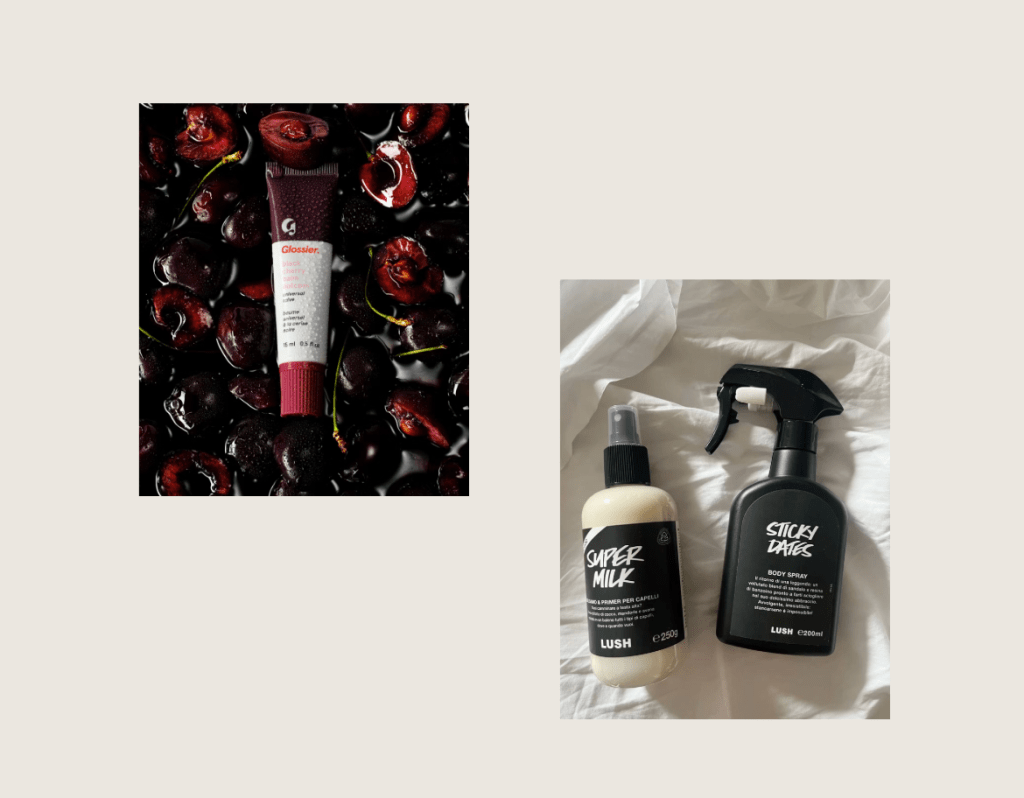
1 – Glossier Black Cherry Blam.com, 2 – Lush Super Milk & Sticky Date Spray
THE ECONOMY OF IT ALL
Of course, this cannot exist within a vacuum. Rising and falling trends reflect the global political and economic climate, in this case in relation to price indexes. Climbing inflation and increasing costs of a standard cart of groceries (as demonstrated in the consumer price index) has made food a major status symbol and luxury indicator. Brands choose foods that position themselves as both accessible and refined to consumers. See the iconic Jacquemus toast for an example of understated elegance.
Food not only diversifies fashion and beauty audiences, but it also increases chances of purchase. Products with higher or unjustifiable costs are often paired with commonplace purchases; coffees, croissants, fruits. The brand has now framed their product as an everyday treat, rather than a payday or annual splurge. A $30 lip balm is suddenly more seemingly modest and justified. Brands walk the line between pricing and demand, aiming to prove to customers that the pleasures they offer are worth more than their display cost. And after all… if we buy a morning latte, why shouldn’t we extend that purchase to an only slightly more pricey product that will also bring us happiness and comfort?

1 – Miu Miu baguette ballet flats, 2 – Jacquemus toast.
TAKEAWAY TIME
Food is the sensory experience that brings marketing to life. Products come alive on a screen, magazine, or billboard, allowing consumers to imagine their lives with certain products. Rather than a fad or micro-trend, food-infused fashion and beauty is a mirror reflecting our human needs for comfort and stability. We crave the feelings we may gain from consumption, drawing on nostalgia, memory, and experience. Food marketing sells desire and longing in an entirely digestible form.
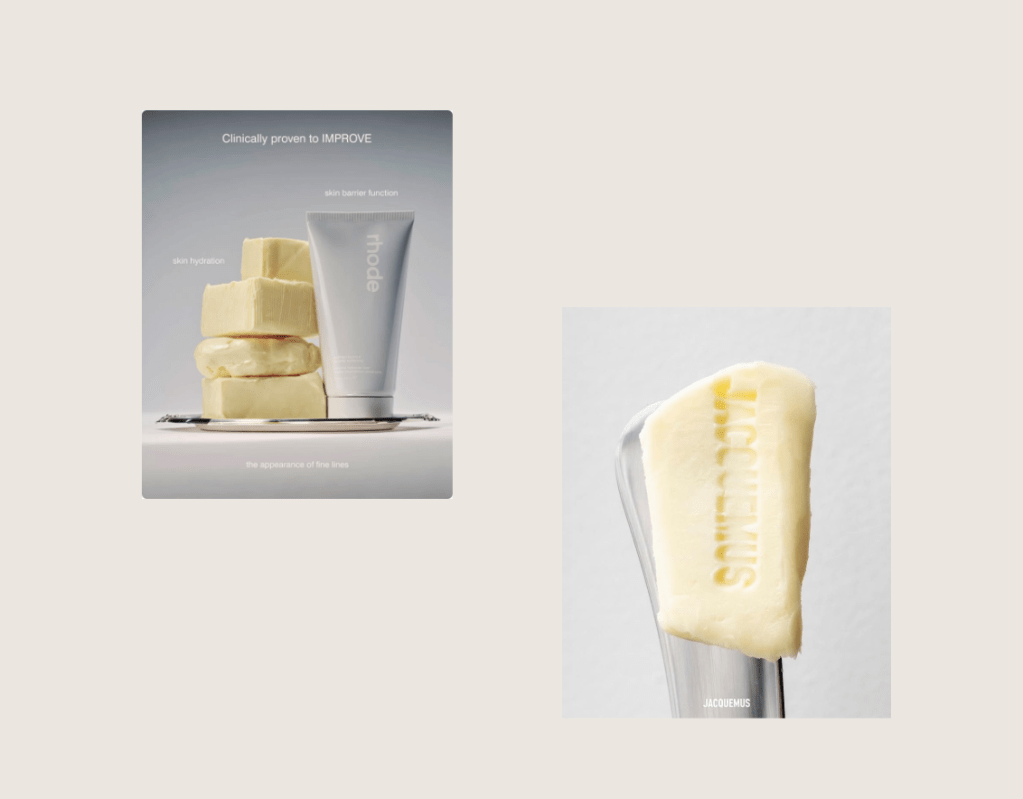
1 – Rhode Skin Barrier, 2 – Jacquemus Butter


 The Violet Post
Leave a comment