A review by Nilani Mathur
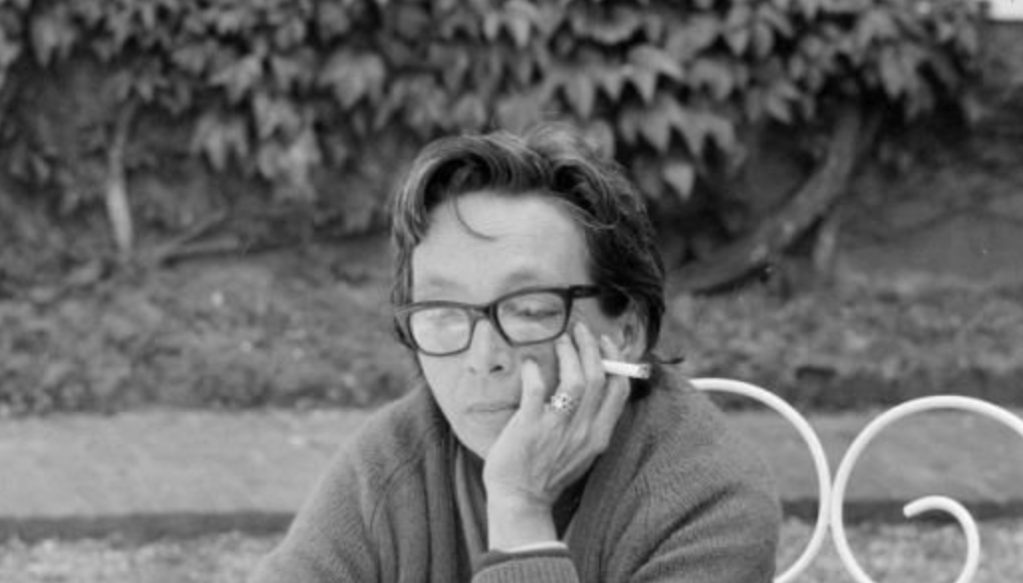
“It’s an airport novel. I wrote it when I was drunk,” said the famous author Marguerite Duras about her 1984 novel The Lover, per The Conversation. Duras’ success undermines that statement: the book has sold over 3 million copies in 43 different languages since publishing, as stated by Penguin Random House. The Lover is a fictionalized autobiography capturing Duras’ adolescent affair with the same significantly older man living in 1930s Indochina that she references in her first book, The Sea Wall (1950). According to Stanford University’s The Book Haven, the legitimacy of the novel is yet to be proven as a whole. It won the Prix Goncourt the year it was published, a prize in French literature from the académie Goncourt to the author of “the best and most imaginative prose work.” The award was suitable and well deserved; The Lover is strikingly beautiful, enchanting, haunting, and disturbing— and those characteristics seem to weave themselves into each other in the work.
The novel begins with a girl traveling home by ferry from holiday to her home in Sa Đéc. The girl is the narrator, French, nameless, and 15 years old. On the ferry, a man approaches her: Chinese, wealthy, captivated, and 27 years old. The two begin a relationship; he cordially drives her to and from boarding school, which she relishes since her family is financially taut, and she is well aware of it. However, they quickly progress and become fervent and unconventional lovers.
While the age gap is distinct in The Lover, it cannot be bunched in with other novels that hold that characteristic, such as Vladimir Nabokov’s Lolita or Kate Elizabeth Russell’s My Dark Vanessa. It distinguishes itself by situating its story within the colonial landscape of Vietnam, entwining themes of cultural and social tension into its study of desire and power. Unlike Lolita, which is told from the predator’s manipulative perspective, or My Dark Vanessa, which delves deeply into the victim’s trauma, The Lover offers a reflective, ambiguous view of a complex relationship.
Duras’ prose is spare, lyrical, and evocative, capturing the fluidity of memory and emotion. Her fragmented style mirrors the nonlinear recollection of the past, blending stark, direct statements with vivid, sensual imagery. The tone is both intimate and detached, serving the narrator’s reflective distance from her younger self.
The sense of loss and the passage of time weighs heavily on the narrative, making it a haunting exploration of evocation, identity, and regret. The fleeting quality of the narrator’s relationship with the lover and its impact on the rest of her life creates a unique and lingering bitterness. Those who seek enigma, sentimentality, and intricacy in literature are prone to become blissfully lost in this story.
While The Lover is not only about love, the novel depicts it in a truly fascinating way, making it all the more worth the read. Duras portrays love as an emotional experience that transcends societal boundaries and even fathomable human emotion at times. Given the characters’ time and circumstances, a multitude of external factors had the potential to suppress their relationship, yet they found ways to ignore them and love each other internally. Her depiction of her family’s remarks and even some of her own are discernibly racist despite having written the novel in retrospect, expressing that love can exist alongside shame.
After everything, one of the novel’s most provocative aspects is how it blends genuine emotional connection with elements of exploitation. The transactional nature of the relationship, as well as the colonial backdrop, invites readers to question what love means when power dynamics are at play. What’s remarkable is that there is authentic tenderness and intimacy in the characters’ bond. This duality disturbs simplistic views of relationships and leaves readers pondering the gray areas in which affection, desire, and power overlap.
Like all books, The Lover may not be one every reader will adore, but there is an incredible chance that they will and a significance in reading it either way. Writing is art, and it is often forgotten that creating art is sharing one’s soul and sparking a response, not solely putting on an act to entertain. The Lover at heart is a mural of life and lust, of death and desire— a juxtaposition of beauty and pain where love is intertwined with emotional wounds and societal constraints, leaving a complex and unforgettable impression.
 The Violet Post
Leave a comment